

Showing posts with label History. Show all posts
Showing posts with label History. Show all posts
Wednesday, February 18, 2015
Friday, November 29, 2013
Good Old West Rock

 |
| Octagon Building, with graffiti |
When you get to the top, you'll see a cave which was used by the Three Judges to hide, and you might ask, why would three judges go hide in a cave? In England in 1660, three British men signed a paper advocating the execution of the English king. Charles I was eventually executed, and afterwards the English Monarchy was abolished, replaced by a Republic called the Commonwealth of England. But in 1660, the Monarchy was restored, Charles' son became the new king, and that's when the Three Judges (Edward Whalley, John Dixwell, and William Goffe) decided to head for the hills. All three men were originally from England and fled to Connecticut in a bid to protect themselves from retaliation for the Regicide of King Charles I.
The Merritt Parkway goes directly through West Rock, which is part of the Metacomet Ridge. In the middle of the ridge above the tunnel, there is an octagonal shaped building, which has been told to serve the purpose of the main ventilation. Here's roughly the location of that building.
View Larger Map

Friday, November 22, 2013
JFK 50 Years Later: The New Haven History
Topics:
History,
JFK,
Robert S Greenberg
(JFK 1917-1963) 50 Years Later: The New Haven History from #NHV on Vimeo.
John F. Kennedy, the 35th president of the United States, was one of the greatest to ever take the oath of office. During his short presidency, he is noted as being responsible for de-escalating the Cold War, averting nuclear armageddon, and energizing the initiative to put an American on the Moon. Kennedy visited the city of New Haven, Connecticut on several occasions. This video (and article) documents all of those events with original media from that very time period.
 |
| Photographs in this article are from the Greenberg Collection may not be reproduced without permission. |
 |
| JFK with Richard C. Lee in 1960 |
In this picture to the left, Kennedy is seen on a large stage with then-mayor Richard C. Lee; it was one of the largest assemblies of people that the New Haven Green had ever seen at the time. (at 1:15)
On June 11, 1962, Kennedy returned to New Haven to receive an honorary degree from Yale University. He is quoted as saying "I have the best of both worlds; a Harvard education, and a Yale degree," he quipped, "I am particularly glad to become a Yale man, because as I think about my troubles, I find that a lot of them have come from other Yale men." (at 1:15)
 |
| JFK on the Green (Greenberg Collection) |
Later the same year, on October 17, 1962, the President toured Connecticut and made another powerful and well-attended speech on the New Haven Green (1:41)
He was infamously assassinated 50 years ago today on Friday, November 22, 1963. The video highlights the headlines from the New Haven Register from the days during the weekend proceeding that event. In addition to the national reports about Oswald being captured and Johnson being sworn in, one article also features a letter which includes a prediction made by a New Haven man.
Before the attempt on Kennedy's life, a young man stationed in Dallas had apparently wrote his mother in New Haven, "Kennedy is coming next week! Ten to one he'll be assassinated by some of these Dallas maniacs! (of course your realize that that would make Johnson president!) Aft the Steventson incident I'm seriously worred about his safety! I mean I'm no Kennedy supporter but..." (3:29)
The Harvard-Yale game, scheduled to take place on Saturday, November 23, 1963, was postponed. Reports from the papers that day prominently feature that information in the headline. A rare program for The Game, which was never played on the date printed, is also featured in the video.
Friday, October 4, 2013
Special Presentation Tonight: LAMP on9
This is the wall where the film will be projected.
As part of a collaboration between Nhv.Org with Robert S Greenberg's Museum, we're launching a few new original films on the wall of the Acme Furniture Building for L.A.M.P. (Light Artists Making Places). In preparation of tonight's event, we've produced a 45-minute film, complete with over 120 different events, dating from 1637 to the near future.
The film will be played in tandem with 3 additional bonus features produced by Robert Greenberg.
The tone of the work is essentially this: in 1645, the colony of New Haven collected its tradable goods, such as beaver fur and wheat, as well as peas. In addition, many of the more prominent citizens of the colony were on board, and never heard from again. They sent it all to England on what was described as the "Great Shippe." The ship was never heard from again, presumably lost at sea. It's now known now as the Phantom Ship, because there was a mass apparition over The Harbor in 1646, where the settlers believed they saw the ship in the clouds after a June summer storm. Henry Wadsworth Longfellow wrote a poem about it. There's a painting at the top of the stairs at the New Haven Historical Society on Whitney Avenue.
This tour de history that Greenberg created focuses on the moments which brought the city together. Many have tried to associate New Haven with misrepresented facts about the origins of certain inventions, but Greenberg gets the facts straight, with documented evidence, sometimes more than three pieces at once, represented as images which appear along the timeline. Many of the high resolution images come from his own source of collectibles, some of which were handed down to him from his grandfather, Simon Evans, who graduated High School with Ernest Borgnine at Hillhouse, which is one of the more obscure facts you'll learn throughout the film; complete with yearbook photo.
Greenberg's message is that tonight marks the return of the Phantom Ship; meaning that commerce and trade is ready to come back to New Haven. "It's a celebration of the survivial and thriving of the colony of New Haven after the loss of 'The Great Shippe.' The truth is that the Phantom Ship was the motivating force to grow and advance the colony, and it success is evident in this timeline."
The film is among the most comprehensive works about the history of New Haven that has ever been created.
Light Artists Making Places (L.A.M.P.) On9 / 9th Square [events page]
Acme / Cafe Nine Parking Lot on Crown Street [directions]
Thursday, July 18, 2013
Confirmed: New Haven Has Common Sense.
Topics:
Baseball,
History,
National Media
 |
| A Baseball Mitt |
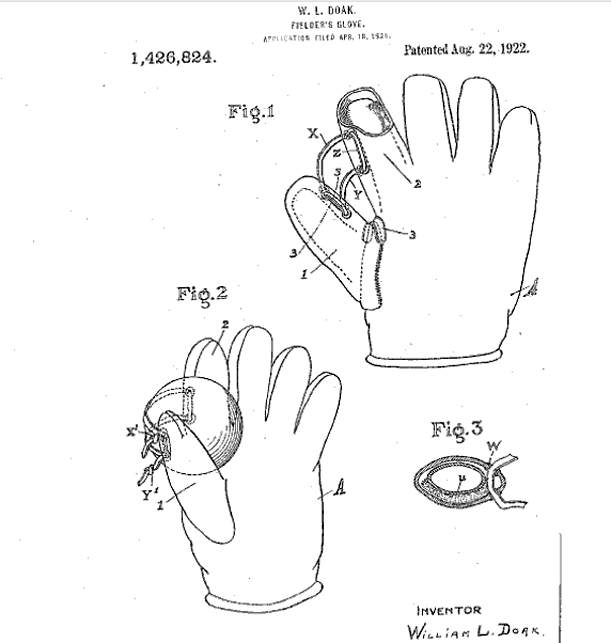
"It’s hard to say exactly who wore the first glove, but some reports claim that catchers were wearing work gloves as early as 1860. A pitcher for the by the name of A.G. Spalding claims that it was New Haven first baseman Charles C. Waite who, in an 1875 game against Boston, first had the audacity (i.e. common sense) to take the field with a glove. Maybe “audacity” isn’t quite the right word. Though there were no rules against gloves, Waite tried to preserve his masculinity by wearing a tan, flesh-colored work glove, hoping no one would notice. People noticed. And Waite was ridiculed mercilessly by fans and players alike. Nonetheless, he persevered."
Sunday, July 14, 2013
Oystering at Pardee-Morris
Topics:
Events,
History,
Lighthouse Park,
New Haven Museum

The New Haven Museum’s Pardee-Morris House is a 6,000 sq. ft 18th-century farmhouse located on Lighthouse Road on the east shore of New Haven harbor. Built by Amos Morris around 1750, the house was burned by the British during their raid on New Haven in 1779 and rebuilt by the Morris family. It remained in that family until 1915, when it was purchased by William Pardee, a descendant of the Morris family, who hoped to make it his home. Pardee died in 1918 and willed the property, along with a small endowment, to the New Haven Museum, then known as the New Haven Colony Historical Society. Today, the Pardee-Morris House is open seasonally for events, classes and tours.
View Larger Map
Learn more about oystering in #nhv at 2p today at the #PardeeMorrisHouse! The house is also open for guided tours til 4p! #ct #history
— New Haven Museum (@NewHavenMuseum) July 14, 2013
Wednesday, June 5, 2013
CT Stone Seen In NYC Landmarks

Local painter Michael Angelis is currently working on painting a landscape of the quarry.
 |
| Pink/Orange Granite |
